


Are You Taking Care of Your Most Important Organ?

When people think about improving their lives, they often focus on goals like becoming more productive, building stronger relationships, advancing their careers, or improving their physical health.
While all of these are worthwhile pursuits, there is one essential factor that influences every one of them:
Brain health.
Your brain is involved in every thought you think, every decision you make, every emotion you experience, and every relationship you build. It is the control center for your entire life. Yet many people spend more time maintaining their cars, phones, or homes than they do caring for the organ that powers everything they do.
The truth is simple: when your brain functions well, life tends to function better. When brain health declines, the effects can be felt in nearly every area of your life.
The Ripple Effect of Brain Health
Imagine waking up after a poor night's sleep. You may feel groggy, unfocused, or mentally sluggish. Tasks that are normally easy seem to require more effort. You may feel more irritable, less patient, or more emotional than usual.
What starts as a lack of sleep doesn't just affect your energy levels. It impacts your ability to think clearly. It affects your mood. It influences your interactions with family, friends, coworkers, and even strangers. It can reduce productivity, increase stress, and make everyday challenges feel much harder than they need to be.
This is a perfect example of how brain health creates a ripple effect throughout your life. When your brain isn't operating at its best, your thinking, emotions, relationships, and performance can all suffer.
The Four Pillars of Success
At
Your
Best
Mind,
we
view
success
and
well-being
through
four
interconnected
pillars: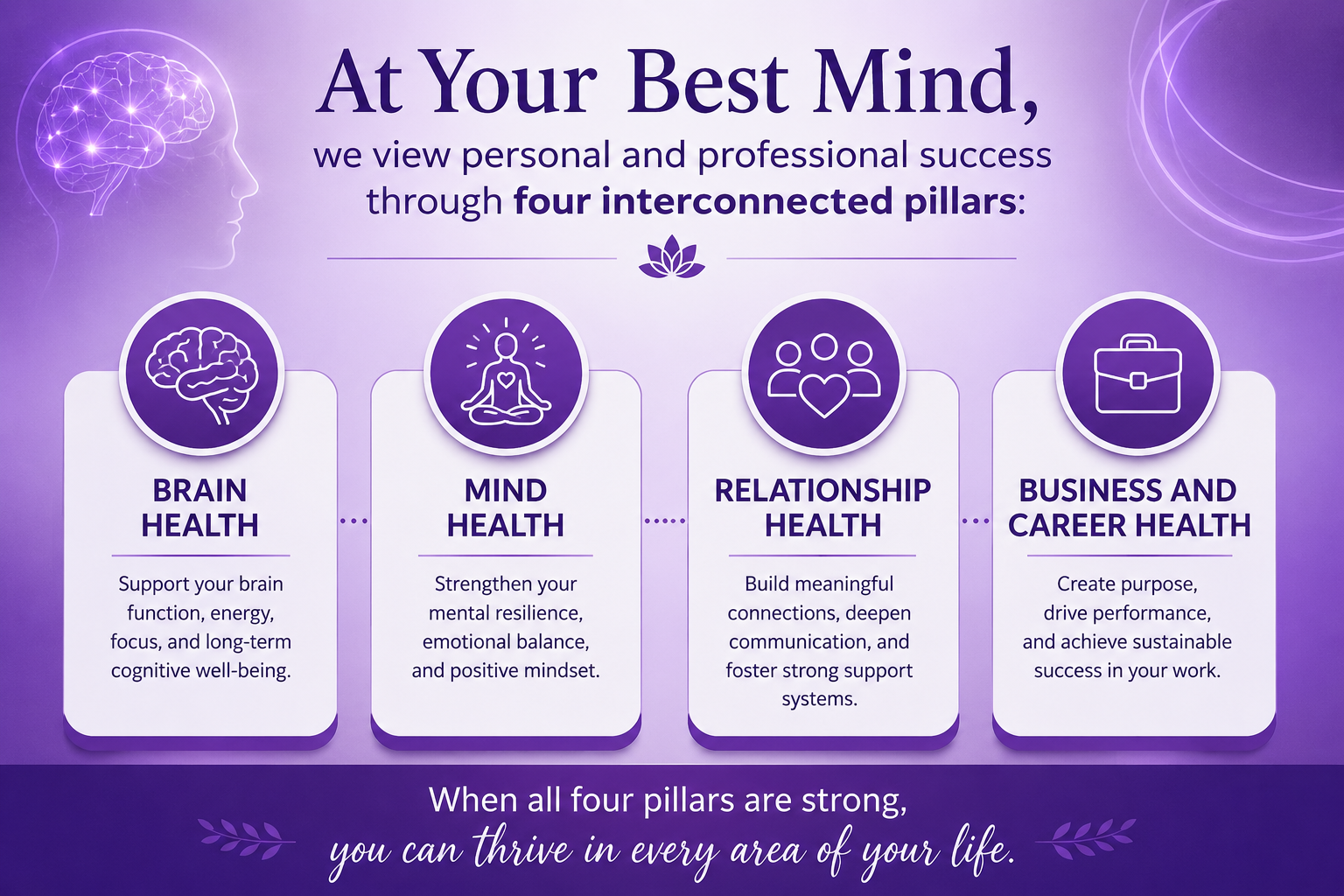
- Brain Health
- Mind Health
- Relationship Health
- Business and Career Health
Each pillar influences the others, but brain health serves as the foundation. Think of it like the foundation of a house. If the foundation is strong, the structure above it is more stable. If the foundation begins to crack, problems eventually appear throughout the entire building.
The same is true for your life. A healthy brain supports better thinking, emotional balance, stronger relationships, and greater success in both personal and professional pursuits.
The Most Important Brain Health Habit
If there were one habit that provides the greatest return for brain health, it would likely be sleep. Sleep is often viewed as a luxury or something that can be sacrificed when life gets busy. In reality, it is one of the most important biological processes your body performs.
During sleep, your brain is hard at work. It helps consolidate memories, processes information from the day, clears waste products, repairs cells, and restores cognitive function. Sleep is also essential for emotional regulation, learning, creativity, and decision-making.
Without enough quality sleep, your brain simply cannot perform at its highest level. Most adults need at least seven hours of sleep each night, and many people function best with closer to eight hours of quality sleep.
Creating Better Sleep Habits
Improving
sleep
doesn't
always
require
dramatic
lifestyle
changes..jpg)
A few simple adjustments can make a meaningful difference:
- Limit Screen Time Before Bed: The bright light from phones, tablets, and computers can interfere with the production of melatonin, the hormone that helps regulate sleep. Consider putting devices away at least 30 to 60 minutes before bedtime to allow your brain to begin preparing for sleep naturally.
- Keep Your Room Cool and Dark: A cooler sleep environment often promotes deeper, more restorative sleep. Darkness also signals the brain that it is time to rest.
- Avoid Heavy Meals Late at Night: Eating too close to bedtime can interfere with the body's ability to settle into restorative sleep.
- Establish a Consistent Routine: Going to bed and waking up at roughly the same time each day helps support your body's natural sleep-wake cycle.
Move Your Body, Strengthen Your Brain
Exercise is often associated with physical fitness, but its benefits extend far beyond muscles and cardiovascular health. Regular movement increases blood flow to the brain, supports healthy neural connections, improves mood, and may help protect against cognitive decline as we age.
The good news is that exercise doesn't have to be intense to be beneficial. Walking, swimming, biking, dancing, gardening, and other enjoyable forms of movement can all support brain health.
Interestingly, activities that combine physical movement with mental engagement (such as dancing, pickleball, tennis, or learning new movement patterns) may provide even greater benefits because they challenge multiple areas of the brain simultaneously.
Hydration:
The
Often-Overlooked
Brain
Booster
Water plays a critical role in brain function. The brain is composed of approximately 75 to 80 percent water, making hydration essential for optimal cognitive performance.
Even mild dehydration can affect concentration, memory, focus, reading comprehension, and problem-solving abilities. In fact, research has shown that relatively small decreases in hydration can begin to impact mental performance before most people even feel thirsty.
If you've ever experienced brain fog, fatigue, headaches, or difficulty concentrating, dehydration may be one contributing factor.
Hydration also helps the body transport nutrients, regulate temperature, and remove waste products. Simply drinking enough water throughout the day can support clearer thinking, better energy levels, and improved overall well-being.
Fuel Your Brain with Better Nutrition
What you eat matters, not just for your body, but for your brain as well. Fortunately, supporting brain health doesn't require a perfect diet.
Instead of focusing on strict rules, focus on increasing nutrient-dense foods while gradually reducing highly processed foods, excess sugar, and artificial ingredients.
Some brain-friendly foods include:
- Blueberries, blackberries, raspberries, and strawberries
- Dark leafy greens such as spinach and kale
- Colorful vegetables
- Healthy fats
- Omega-3-rich foods
- Whole, minimally processed foods
One of the most important lessons in nutrition is that consistency matters more than perfection. Rather than making extreme changes that are difficult to maintain, focus on small improvements that become sustainable habits. Over time, those habits can have a significant impact on brain function and overall health.
Progress Over Perfection
When it comes to improving brain health, many people make the mistake of trying to change everything at once.
They adopt strict diets, intense exercise plans, and unrealistic expectations, only to become overwhelmed and abandon their efforts entirely.
A
better
approach
is
to
focus
on
gradual
progress. Add
one
healthy
habit
at
a
time.
- Drink a little more water.
- Go to bed 30 minutes earlier.
- Take a daily walk.
- Add more colorful fruits and vegetables to your meals.
Small changes may seem insignificant in the moment, but over time they can create powerful results.
Final Thoughts
Brain health affects every aspect of your life. It influences how you think, learn, communicate, manage emotions, build relationships, and pursue your goals.
The encouraging news is that many of the most effective ways to support brain health are simple, accessible, and within your control.
- Prioritize sleep.
- Move your body regularly.
- Stay hydrated.
- Eat nourishing foods.
And remember that lasting change doesn't happen overnight. It happens through small, consistent choices made day after day. Because when you invest in your brain, you're investing in every part of your life.
A healthier brain can help you think more clearly, feel more balanced, build stronger relationships, and create a stronger foundation for whatever success means to you.
