


Beyond Sleep: Understanding the 7 Types of Rest Your Brain and Body Need
Most of us know what it feels like to be tired. We wake up exhausted, struggle to focus throughout the day, feel mentally overwhelmed, or find ourselves running on autopilot just trying to get through our responsibilities. Our first instinct is often to assume we need more sleep. And sometimes we do.
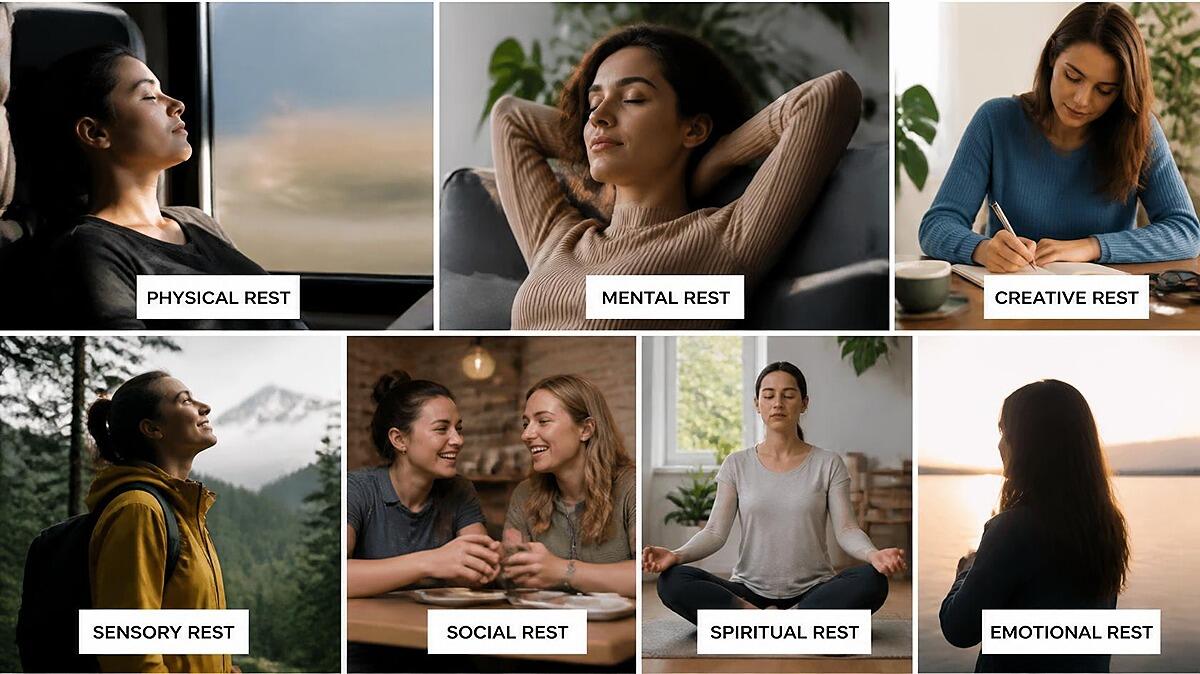
But have you ever gotten a full night's sleep and still felt drained? If so, sleep may not be the only thing you're missing. There are seven different types of rest that contribute to our overall well-being. While sleep is one important form of recovery, it is only one piece of the puzzle. Understanding the different ways we recharge can help us improve our energy, mental clarity, emotional resilience, and overall brain health.
Why Rest Matters for Brain Health
Your brain is constantly working. Every day it processes information, solves problems, regulates emotions, manages relationships, makes decisions, and responds to countless demands from your environment. Just as muscles require recovery after physical exertion, the brain also requires opportunities to rest and restore itself.
When we don't get the type of rest we need, we may experience symptoms such as:
- Mental fog
- Difficulty concentrating
- Increased stress
- Irritability
- Reduced creativity
- Emotional exhaustion
- Lack of motivation
- Physical fatigue
The good news is that understanding what type of rest you're missing can help you recharge more effectively.
Let's explore the seven types of rest.
1. Physical Rest: Recharging the Body
Physical rest is the most familiar form of recovery.
It includes quality sleep, naps, and restorative activities that help the body recover from physical demands. Physical rest also includes gentle movement such as stretching, yoga, or walking that helps relieve tension and improve circulation.
When physical rest is lacking, both the body and brain can suffer. Research consistently shows that inadequate sleep affects memory, attention, decision-making, emotional regulation, and overall cognitive performance.
Ways to Improve Physical Rest

- Prioritize consistent sleep schedules
- Take movement breaks throughout the day
- Stretch regularly
- Avoid prolonged sitting
- Listen to your body's signals for recovery
2. Mental Rest: Giving Your Brain a Break
Do you ever feel like your mind never stops? Many people experience mental fatigue from constant thinking, planning, decision-making, and information processing.
Mental rest helps clear the mental clutter that can accumulate throughout the day. Without adequate mental recovery, the brain can become overloaded, making it harder to focus, solve problems, and think clearly.
Ways to Improve Mental Rest
- Schedule short breaks during the day
- Practice mindfulness or meditation
- Take a few minutes for deep breathing
- Create boundaries around work and technology
- Allow yourself moments of quiet reflection
Sometimes stepping away from a task for a few minutes can improve productivity more than pushing through exhaustion.
3. Sensory Rest: Escaping Constant Stimulation
Modern life bombards us with sensory input. Phones buzz. Emails arrive constantly. Screens dominate much of our waking hours. Background noise, traffic, meetings, and endless notifications keep our nervous systems engaged. Over time, this stimulation can become exhausting.
Sensory rest allows the nervous system to recover from the constant demand to process information.
Ways
to
Improve
Sensory
Rest
- Silence unnecessary notifications
- Schedule screen-free periods
- Spend time in quiet environments
- Reduce background noise when possible
- Take breaks from technology throughout the day
Even a few minutes of sensory quiet can help reduce feelings of overwhelm.
4. Creative Rest: Refueling Inspiration
Many people associate creativity with artists, writers, or musicians. In reality, creativity is something we use every day. Whether we're solving problems, finding solutions, planning projects, or imagining possibilities, creativity plays an important role in daily life.
Creative rest helps replenish our ability to think differently and see the world with fresh eyes.
Ways to Improve Creative Rest
- Spend time in nature
- Listen to music
- Visit museums, galleries, or inspiring places
- Read books that expand your perspective
- Change your environment occasionally
Creative rest reminds us that inspiration often comes when we stop forcing it.
5. Emotional Rest: Releasing Emotional Weight
Life requires us to manage emotions constantly. We support family members, navigate relationships, handle workplace challenges, and often suppress our own feelings while caring for others.
Emotional rest involves creating space to process feelings honestly and authentically. Without emotional rest, stress can build up over time, leaving us feeling exhausted and overwhelmed.
Ways
to
Improve
Emotional
Rest
- Talk with trusted friends or family members
- Journal your thoughts and feelings
- Practice healthy boundaries
- Allow yourself to acknowledge difficult emotions
- Seek support when needed
Emotional rest is not about avoiding emotions. It is about giving yourself permission to experience and process them.
6. Social Rest: Balancing Connection and Solitude
Human connection is essential for well-being, but not all social interactions affect us the same way. Some people leave us feeling energized and supported. Others leave us feeling drained.
Social rest means intentionally balancing meaningful connection with time alone to recharge.
Ways to Improve Social Rest
- Spend more time with supportive people
- Reduce interactions that consistently deplete your energy
- Make time for meaningful relationships
- Allow yourself time for solitude
- Protect your personal boundaries
Finding the right balance between connection and recovery can have a powerful impact on mental and emotional health.
7. Spiritual Rest: Reconnecting with Meaning
Spiritual rest is often misunderstood. It doesn't necessarily refer to religion, although faith can certainly be part of it. Spiritual rest involves connecting with purpose, meaning, values, and something larger than ourselves.
Many people find spiritual rest through gratitude, service, reflection, prayer, meditation, or spending time in nature. When we feel disconnected from our sense of purpose, life can feel more exhausting.
Ways
to
Improve
Spiritual
Rest
- Practice gratitude
- Reflect on what matters most to you
- Volunteer or help others
- Spend time in prayer or meditation
- Connect with activities that provide meaning
Purpose can be one of the most powerful sources of energy and resilience.
Which Type of Rest Are You Missing?
One of the most valuable aspects of this framework is that it helps us identify the true source of our fatigue. When we're exhausted, we often assume the solution is simply more sleep.
Sometimes that's true. But sometimes the problem isn't physical fatigue at all.
Perhaps you're mentally overloaded from constant decision-making. Maybe you're emotionally drained from caring for others. Perhaps you're experiencing sensory overload from technology or creative fatigue from a lack of inspiration. The type of rest you need depends on the type of exhaustion you're experiencing.
A Smarter Approach to Recovery
In today's fast-paced world, many people view rest as something they earn after completing their responsibilities. But brain health research continues to show that recovery is not a reward; it's a necessity.
Rest allows the brain and body to function at their best. It supports focus, creativity, emotional resilience, decision-making, relationships, and overall well-being.
The next time you feel depleted, pause and ask yourself: Do I need more sleep, or do I need a different type of rest?
The answer may help you recharge more effectively and move closer to a healthier brain, a stronger mind, and a more balanced life.
