


How to Make Your Good Morning Routine Stick

 We’ve
all
done
it.
You
wake
up
inspired.
You
promise
yourself
this
is
the
day
you
finally
become
the
person
who
journals,
hydrates,
stretches,
plans,
meditates,
and
conquers
the
world
before
8
a.m. Three
days
later?
Gone.
The
problem
isn’t
motivation.
It’s
misunderstanding
how
your
brain
builds
habits.
Let’s
fix
that.
We’ve
all
done
it.
You
wake
up
inspired.
You
promise
yourself
this
is
the
day
you
finally
become
the
person
who
journals,
hydrates,
stretches,
plans,
meditates,
and
conquers
the
world
before
8
a.m. Three
days
later?
Gone.
The
problem
isn’t
motivation.
It’s
misunderstanding
how
your
brain
builds
habits.
Let’s
fix
that.
Why Repetition Is Everything
Researchers at Massachusetts Institute of Technology have shown that the basal ganglia bundle repeated actions into automatic sequences. Every time you repeat a behavior, neural pathways strengthen. The brain essentially says: “Oh, we do this now. Got it.”
Over time:
- Habits require less mental effort
- Cognitive load decreases
- More brain power becomes available for complex thinking
A 2025 study from University of Cambridge found that short, repeatable morning habits improved working memory and task accuracy by up to 42%. That’s not just about feeling productive. That’s measurable cognitive improvement. Consistency reduces decision fatigue. Reduced decision fatigue increases performance. Your brain thrives on automation.
 Morning
Is
Prime
Time
for
Neuroplasticity
Morning
Is
Prime
Time
for
Neuroplasticity
Your brain’s neuroplasticity (its ability to rewire and adapt) is strongest in the morning hours. After sleep, your mind is refreshed. Stress is lower. Cognitive interference is minimal. That makes the early hours ideal for shaping new neural patterns. Research suggests that just 14 days of consistent habit practice can measurably improve working memory capacity. But here’s the catch: You must keep it small.
The Secret: Start Small and Stack
Big routines fail because they overload the prefrontal cortex, the part of your brain responsible for decision-making and willpower.
Instead, use habit stacking.
Attach a new behavior to something you already do:
- After brushing your teeth → drink a glass of water
- After pouring coffee → write your top priority
- After stretching → list three gratitudes
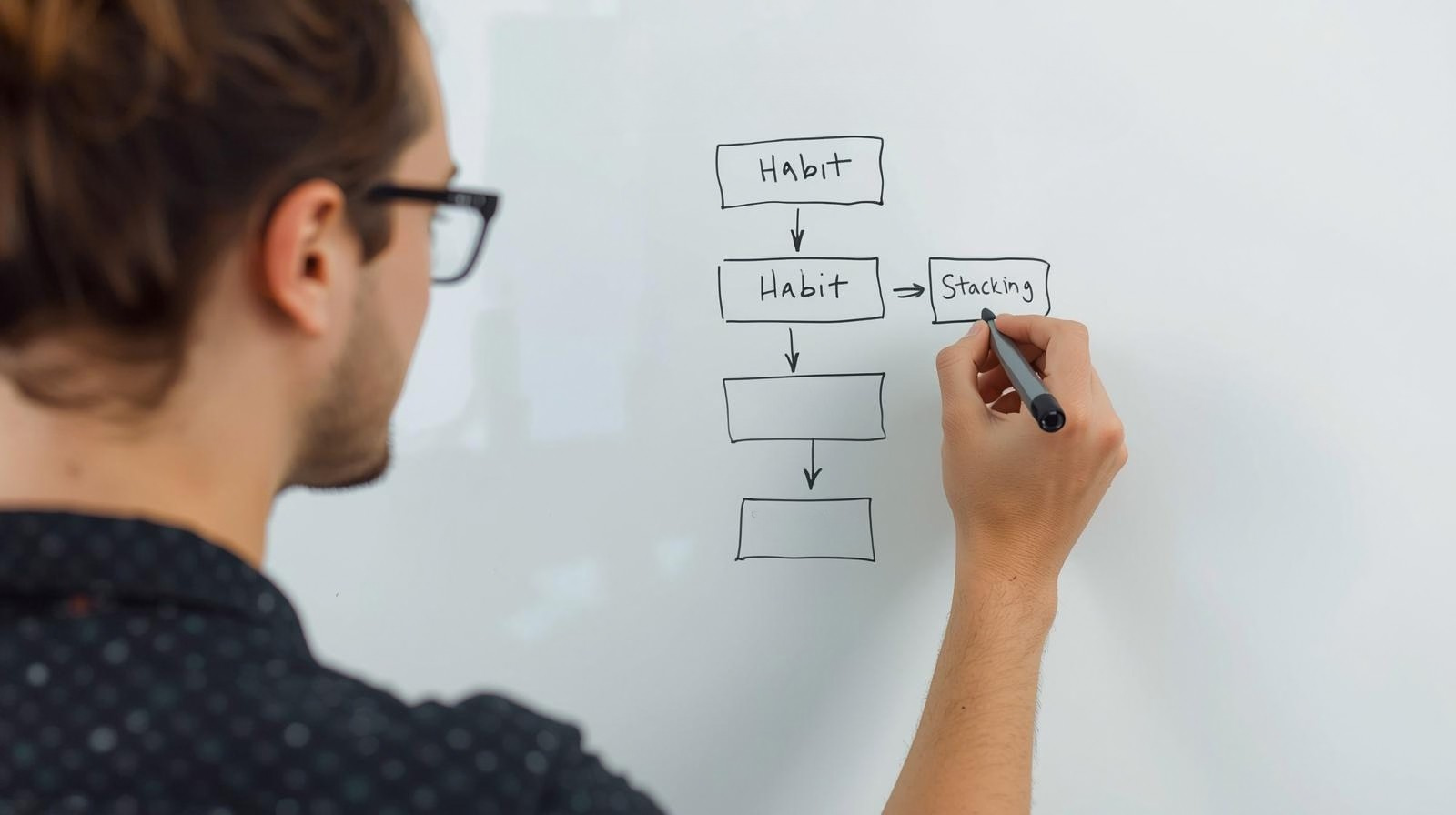
This works because your brain already has a strong neural loop for the original habit. By linking a new action to it, you strengthen the connection and make the new behavior easier to recall. You’re not building from scratch. You’re plugging into an existing circuit.
Consistency > Perfection
When you first build a habit, your prefrontal cortex works hard. It requires focus, discipline, and conscious effort.
But with repetition, control shifts to the dorsal striatum the brain region responsible for automatic stimulus-response learning. That’s when behavior becomes effortless.
The goal is not to design the “perfect” morning routine. The goal is to design a repeatable one. Miss a day? Restart immediately. Don’t expand too fast. Protect the sequence. Remember: The brain rewards reliability.
Win the First 30 Minutes
Your
first
30
minutes
set
your
cognitive
tone.
When you:
- Move your body
- Hydrate
- Clarify your top priority
- Practice gratitude
You
send
a
signal
to
your
nervous
system:
“I
am
intentional.”
That identity shift matters.
A
consistent
morning
routine
doesn’t
just
organize
your
schedule.
It
rewires
how
you
see
yourself.
And identity-driven habits are the ones that last.
 The
Simple
Blueprint
The
Simple
Blueprint
If you want your good morning routine to stick, follow this structure:
- Keep it under 30 minutes
- Start with no more than 3 habits
- Stack each one onto an existing behavior
- Repeat daily for 14 days
- Expand only after consistency is automatic
That’s it. No 10-step optimization protocol. No 5 a.m. wake-up requirement. No extreme overhaul. Just repetition.
You don’t need a perfect morning. You need a predictable one. Because when your brain doesn’t have to decide what to do first, it can focus on what actually matters. Win the first 30 minutes and you dramatically increase your odds of winning the day.
-Julie "Brain Lady" Anderson