


Why Your Brain Keeps Reaching for Your Phone
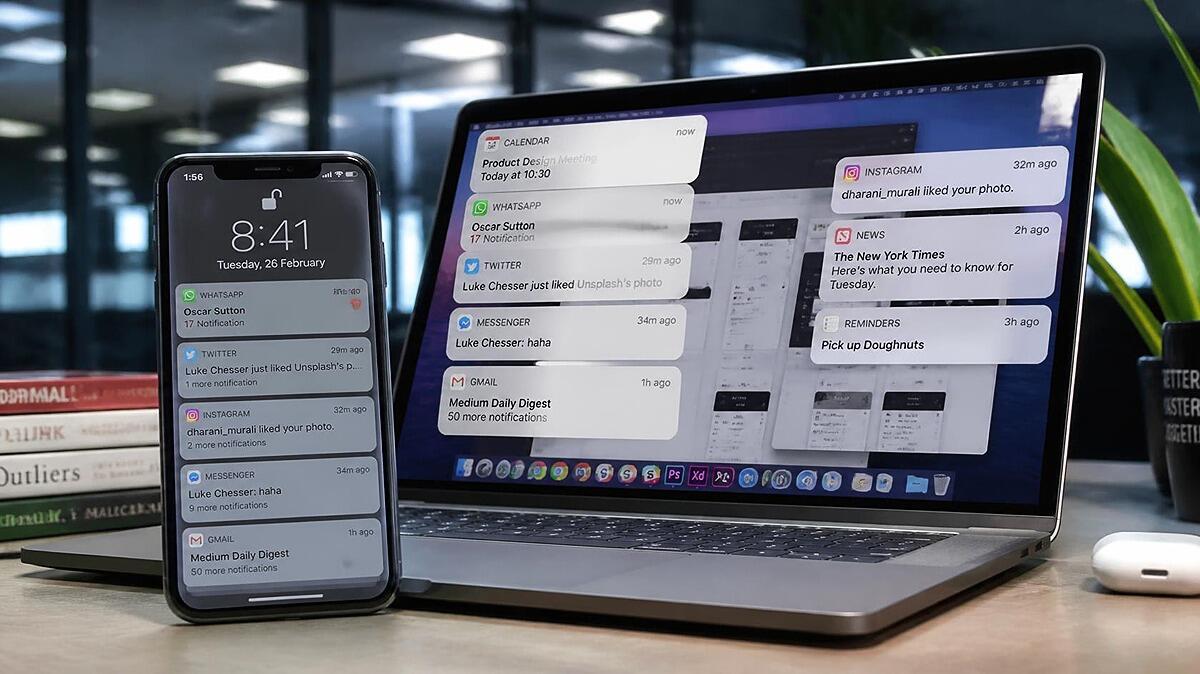
Have you ever picked up your phone to check one thing and found yourself scrolling 20 minutes later?
Maybe you opened your laptop to pay a bill, only to get distracted by an email, a news article, or a social media notification. Perhaps you've sat down to read a book, have a conversation, or complete a project, only to feel a strong urge to check your device.
If this sounds familiar, you're not alone. Many people feel as though their ability to focus has declined in recent years. While it's easy to blame ourselves for lacking discipline or willpower, neuroscience suggests there may be more going on beneath the surface.
The challenge isn't simply that we have smartphones, laptops, tablets, and smartwatches. It's that these technologies are designed to engage one of the brain's most powerful systems: the dopamine reward system.
The Real Problem May Not Be Your Phone
For years, we've been told that the solution to distraction is simple: put your phone away. While reducing phone use can certainly help, research suggests the issue may be more complicated.
In one study, participants placed their phones approximately 1.5 meters away from them. Researchers expected their focus to improve. Instead, participants simply shifted their attention to another device, such as a laptop. The distraction didn't disappear, it changed forms.
This finding reveals an important truth. The real issue isn't necessarily proximity to a device. It's the dopamine-driven feedback loop that keeps our brains searching for the next piece of information, stimulation, or reward.
What Is Dopamine?
Dopamine is a neurotransmitter that plays an important role in motivation, learning, attention, and reward. People often think of dopamine as the brain's "pleasure chemical," but that description is incomplete. Dopamine is also heavily involved in anticipation. It helps motivate us to pursue goals and seek out experiences that may be rewarding.
One of the reasons dopamine is so powerful is that it often responds not just to rewards themselves, but to the possibility of a reward. That possibility keeps us curious. It keeps us checking. And it keeps us coming back for more.
Why Technology Captures Our Attention
Modern technology is remarkably effective at engaging the brain.
Many digital platforms use features that strongly activate our attention and reward systems, including:
- Variable rewards
- Sensory triggers
- Instant novelty
Variable Rewards
Sometimes a notification is important. Sometimes it isn't. Sometimes an email contains exciting news. Sometimes it doesn't.
Because we never know what we'll find, our brains continue checking. The uncertainty itself becomes rewarding.
Sensory Triggers
Sounds, vibrations, flashing icons, banners, and alerts are all designed to grab our attention.
Even when we're focused on something else, these cues can pull us away from the task at hand.
Instant Novelty
Human brains are naturally attracted to new information. Technology provides an endless stream of it.
There is always another article, video, message, update, or post waiting to be discovered.
Our brains rarely run out of opportunities to seek something new.
The Hidden Cost of Constant Distraction
At first glance, checking a notification or scrolling for a few minutes may seem harmless. But the impact isn't always about the amount of time lost.
It's about what happens to our attention. Every time we switch focus, the brain has to redirect its resources.
When this happens repeatedly throughout the day, it can become harder to stay engaged with activities that require deeper concentration.
You may notice:
- Difficulty focusing on one task
- Feeling mentally scattered
- Increased forgetfulness
- Reduced productivity
- Trouble completing projects
- Feeling busy but not accomplished
- Mental fatigue at the end of the day
Many people assume they are multitasking effectively. In reality, the brain is often switching rapidly between tasks, which can require additional mental effort.
Why Willpower Isn't Always the Answer
When people struggle with distraction, they often become frustrated with themselves. They tell themselves they need more discipline.
More self-control. More willpower.
But neuroscience suggests that distraction isn't always a character flaw. The brain is responding to systems specifically designed to capture and hold attention.
That's why simply trying harder isn't always enough. Instead of relying entirely on willpower, it can be helpful to create environments that make focus easier.
Small Changes That Can Make a Big Difference
Improving focus doesn't require abandoning technology. It requires using it more intentionally.
Consider trying a few of these strategies:
Turn Off Non-Essential Notifications
Every alert creates an opportunity for your attention to shift. Reducing unnecessary notifications can decrease interruptions throughout the day.
Create Device-Free Periods
Set aside specific times when you're fully present with a task, hobby, meal, or conversation.
Focus on One Thing at a Time
Single-tasking often allows the brain to work more efficiently than constantly switching between activities.
Take Purposeful Breaks
The brain benefits from periods of recovery. Taking intentional breaks can be more effective than repeatedly checking devices throughout the day.
Be Aware of Your Triggers
Notice what causes you to reach for your phone or open a new tab. Awareness is often the first step toward changing habits.
Protecting One of Your Most Valuable Resources
Attention shapes nearly every part of our lives. It influences our relationships, learning, productivity, creativity, decision-making, and overall well-being. Yet attention is increasingly under pressure.
The next time you find yourself reaching for your phone without thinking, remember that the challenge may not simply be a lack of discipline. The issue may be a dopamine-driven attention system doing exactly what it was designed to do. The good news is that understanding how the brain works gives us the opportunity to make more intentional choices.
We may not be able to eliminate distractions entirely, but we can learn to manage them more effectively. And in a world competing constantly for our attention, that may be one of the healthiest things we can do for our brains. Because where we place our attention ultimately shapes how we experience our lives.
